
How Many Followers You Need to Make Money on Instagram
How Many Followers You Need to Make Money on Instagram
Affiliate links, phone-made digital products, faceless quote pages, stacked funnels. A look at the income routes creators are genuinely using on Instagram and what each one pays.
- 1How Many Followers You Need for Each Instagram Monetization Tool
- 2Affiliate Marketing That Doesn’t Feel Spammy
- Here’s how real users are doing it:
- 3Selling Digital Products From Your Phone
- 4What Faceless Quote Pages Can and Cannot Earn
- Why this works:
- 5Funnels That Sell Without Feeling Salesy
- 6Clipping.io and Other Low-Lift Monetization Tools
- 7The Payout Account Rule That Can Erase What You Have Earned
- 8Building a Brand First, Monetizing Later
- 9The Layered Approach: Stack Your Income Streams
- 10Final Thoughts
- 11Frequently Asked Questions
- How many followers do you need to make money on Instagram?
- Do you need 10,000 followers for Instagram Subscriptions?
- How much does Instagram pay per Star on Gifts?
- Can a faceless quote page earn money on Instagram?
- What happens if you never set up an Instagram payout account?
- Can anyone join Instagram’s bonus program?
Most Instagram monetization advice feels out of touch or outdated.
Short answer: Instagram publishes a follower minimum for three of its five earning tools. Gifts on reels needs 500 followers, Meta Creator Marketplace needs 1,000, and Subscriptions needs 10,000. Badges and bonuses publish no follower number, and selling your own products through Instagram needs none at all.
So I went digging through real conversations where creators shared exactly how they’re making money right now, from affiliate marketing and faceless quote pages to low-effort digital product sales.
What I found was a mix of clever hustle, simple systems, and people quietly stacking income without ever going viral.
In this guide, I’ll break it all down with:
-
The most common monetization methods people are using today
-
What’s working for beginners vs experienced creators
-
Specific examples from real users
-
Smart tools that help you monetize without burning out
You don’t need a massive following for most of these methods.
You need a system that matches your skills, your time, and what people are willing to pay for.
Let’s get into it.
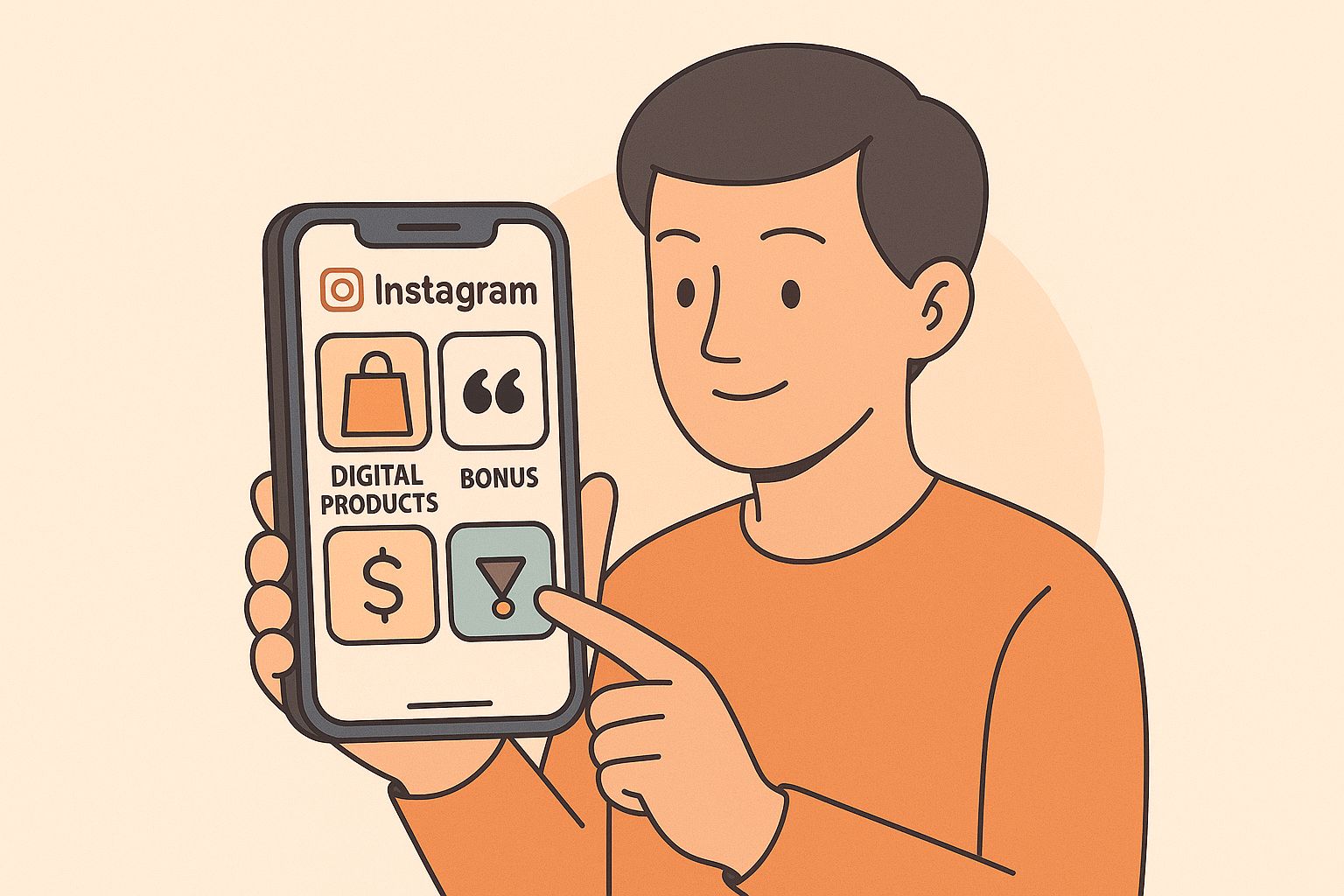
How Many Followers You Need for Each Instagram Monetization Tool
Three of Instagram’s five monetization tools state a follower minimum on their own eligibility pages. Gifts asks for “at least 500 followers”, Meta Creator Marketplace asks for “a minimum of 1,000 followers”, and Subscriptions asks for a professional account “with at least 10,000 followers”. Every figure here was read off Instagram’s own Help Center pages in September 2026.
| Tool | Published follower minimum | Other published requirements |
|---|---|---|
| Gifts on reels | 500 | Professional account, 18 or older, payout account already set up, one of 49 listed countries |
| Meta Creator Marketplace | 1,000 | Professional public account, 18 or older, not available in Crimea, Cuba, Iran, North Korea, Syria or Russia |
| Instagram Subscriptions | 10,000 | Professional account, 18 or older, one of 49 listed countries |
| Badges on live video | None published | Instagram revenue share currently 0%, payments capped at $250 per supporter |
| Bonuses | None published | Invitation only, with an element of random selection |
Badges and bonuses are the two with no number attached. Bonuses cannot be applied for at all. Instagram says it “may offer specific bonus programs to creators by invitation only for a limited time”, that “there is an element of random selection due to the nature of product testing”, and that it will “announce when we are ready to offer public eligibility for a bonus program”.
A follower expectation still applies to every tool, without a figure attached to it. The Partner Monetization Policies say creators “must have an authentic, established presence on Instagram from Meta” and that this “also includes maintaining a sufficient follower base”.
Clearing 500 followers on Gifts is worth less than it sounds. Instagram pays “$.01 USD for every Star received”, so a reel that collects 1,000 Stars returns about ten dollars to the creator. Instagram also takes a share when the viewer buys the Stars, and the app store fee on that purchase is “typically 30%”.
Badges split the money more generously and then cap it. Instagram’s “revenue share is currently at 0%” on badges while “Google and Apple collect 30% in fees for in-app purchases”, and badge payments in a single live video are “capped at $250 per supporter”.
Three of these five gates are about reach rather than skill, which is why steady growth without a viral post matters more than one lucky reel. The methods in the rest of this guide do not wait for any of these thresholds.
Affiliate Marketing That Doesn’t Feel Spammy
Let’s get this out of the way first, affiliate marketing still works on Instagram.
But the way people approach it has changed.
Instead of spamming links to random products in bios or stories, creators are becoming selective and strategic. They promote products they actually use or have tested, and they wrap those recommendations into useful content.
Here’s how real users are doing it:
-
One creator mentioned they only promote tools that helped them personally. No random junk.
-
Another sells high-ticket affiliate products, earning $3,000+ from a single sale. They focus on connecting a buyer with a real solution, not chasing volume.
-
Some use Instagram to funnel traffic into other channels, email lists, blogs, or YouTube, where longer-form affiliate content converts better.
The key difference?
These creators treat Instagram as a discovery tool, not a sales page. They build trust with their audience through:
-
Educational content (e.g. how-tos, product comparisons)
-
Lifestyle or testimonial-style Reels
-
Story-based tutorials with soft mentions of the product
You’ll also see creators pairing Instagram with Flick, a tool that helps schedule content, find trending hashtags, and optimize posts for reach. It saves time and boosts visibility, perfect for those running affiliate campaigns solo.
Pro tip: If you’re starting out, pick just one product you love. Build a simple content plan around it. You don’t need 10 different links to start making commissions.
Selling Digital Products From Your Phone
One of the most popular methods is selling ready-made digital products, ebooks, guides, templates, through Instagram.
Here’s why this model works:
-
You create the product once
-
You sell it over and over again
-
You keep 100% of the profit (if it’s your own)
What surprised me was how simple it is to get started.
Many creators mentioned using Canva to build out:
-
7-day meal plans
-
Business checklists
-
Beginner workout guides
-
Digital planners and journals
-
Instagram growth templates
These are often packaged as PDFs and promoted in posts, stories, or Reels. Some give away one product for free to build an audience or email list, then upsell more advanced versions later.
A comment that stood out explained why people still buy these:
“Yes, you can find all this stuff online for free. But people don’t want to spend hours searching. They want a clear, done-for-you solution they can start using today.”
One creator even mentioned never showing their face and still selling products just by understanding what their audience needs, and offering it in a clean, no-fluff way.
If you’re new to this:
-
Think of one problem you’ve solved for yourself
-
Package the solution into a small, actionable product
-
Promote it consistently using value-first content
Instagram works well as a funnel to these kinds of products. Combine it with tools like Systeme IO to set up your store, email sequence, and sales page, all in one place.
What Faceless Quote Pages Can and Cannot Earn
If you think you have to show your face to make money on Instagram, think again.
One of the most surprising responses came from a creator in the faceless quote page niche. Here’s how their setup works:
-
They run a niche quote page with empowering, motivational content.
-
Every post is designed to speak directly to a target audience (e.g. people who want to start a side hustle or escape 9 to 5 life).
-
They joined a private course/hub that gave them:
-
Done-for-you digital products (guides, stock reels, templates)
-
PLR/MRR licenses so they can resell the content as their own
-
An affiliate program to earn commissions on the course itself
-
They promote the products using smart content, often recycled and repurposed using stock visuals and pre-written captions. Then they direct followers to links in bio, pinned comments, or stories.
It’s hands-off, scalable, and doesn’t require personal branding.
There is a hard limit on this model that almost nobody mentions. Instagram’s Content Monetization Policies say creators “can only monetize content that they created or were involved in the creation of, or that directly features the creator or publisher”, and that content “that is unoriginal or reproduced without making meaningful enhancements (commentary, parody, creative editing, etc.) cannot be monetized”.
The same policy names “Text montages” among its prohibited formats, defined as content that “primarily displays still or moving images with overlaid text”. A reposted quote card sits inside that definition.
A quote page reselling PLR or MRR products can still take payments through its own store and still earn affiliate commissions, because that money never passes through Instagram. It will not qualify for Gifts, Subscriptions or a bonus while the feed is made of resold templates.
Buying followers to reach the 500 or 1,000 gate closes the door from the other side. The Partner Monetization Policies say creators “may not engage in any behavior that artificially boosts or amplifies followers, views or engagement for the purpose of generating more revenue”.
Quote pages grow fast when they post consistently. They benefit from repost culture, followers are more likely to save and share quotes than selfies.
Why this works:
-
You build an audience without showing your face
-
You monetize in multiple ways: digital products + affiliate commissions + shoutouts
-
You can automate the posting process with scheduling tools, keeping in mind that Instagram’s monetization policies require an authentic, established presence
This approach is popular among people who prefer staying behind the scenes. You only need a sharp niche and a consistent content loop.
Funnels That Sell Without Feeling Salesy
Some creators have turned Instagram into a full-on sales machine.
They do this by building funnels, simple customer journeys that move followers from interest to purchase without the pressure of a hard sell.
Here’s a setup that came up in the thread:
-
Lead magnet
They offer a freebie (like a mini-guide or checklist) in exchange for an email. -
High-ticket offer
Their email sequence introduces a coaching program, course, or digital product bundle. -
Downsell option
If the follower doesn’t bite, they’re offered a cheaper product instead.
Instagram is the entry point. They create curiosity-driven Reels, story polls, or carousels that highlight a pain point, and the solution leads to their link in bio.
One user said they run paid ads to boost their Instagram reach, then route followers into this funnel. Others let Instagram grow organically and use posts as soft pitches.
A few creators said they use Systeme IO (again) to build these funnels. It handles everything from landing pages to emails to sales tracking without extra software.
What’s interesting is that these funnels don’t scream “sales.” Instead, they feel like:
-
Helpful tutorials
-
Behind-the-scenes lessons
-
“Here’s how I did it” posts
It’s a content-first approach with a clean backend that quietly brings in sales 24/7.
Clipping.io and Other Low-Lift Monetization Tools
Not every income stream on Instagram requires selling or even creating content from scratch.
One reply pointed to Clipping.io, a platform that lets creators earn money by adding small branded elements, like a logo or watermark, to their videos.
Here’s how it works:
-
You sign up and browse open campaigns
-
Some campaigns ask you to add a logo to the bottom of your videos
-
Others may ask you to use a certain background sound or mention a product
-
Once your content starts getting views, you earn per impression
One user claimed they earn around $1,000/month just from this.
Treat that as one person’s figure rather than a rate. Clipping.io campaigns set their own terms and there is no published standard payout, so what you make depends on which campaigns accept you and how far your videos travel.
There are no upfront costs, and it works with Instagram, TikTok, YouTube, and other platforms. It’s best for those who already post content consistently and want to layer in passive income without changing their style or message.
This model is ideal if you:
-
Don’t want to sell or promote anything directly
-
Already have decent engagement or regular posting habits
-
Want an extra income stream that scales quietly
As Instagram leans more into video (especially Reels), expect tools like this to become more common.
The Payout Account Rule That Can Erase What You Have Earned
Instagram lets you switch some monetization tools on before you have set up a payout account, and a ceiling and a clock come with that. Its payouts page states that without one you can earn up to “$500 per monetization tool, with a maximum of $1,500 across 3 tools”.
Two deadlines then run from the day you onboard, and they do different things:
- Within 5 months of onboarding, or once you reach the $500 maximum on a tool, “you won’t be able to earn any more money until you set up your account”.
- Within 6 months of onboarding, “you’ll forfeit and waive all rights to receive your earnings”.
Gifts sidesteps the question by making the account a condition of entry. Its eligibility list includes “Have set up a payout account on Instagram”, and Instagram spells out the consequence: “If a fan buys a gift and you haven’t set up a payout account yet, you’ll be able to see who sent you a gift, but you won’t be able to receive earnings from it.”
The practical order is to finish the payout and tax setup on the day you turn a tool on, while nothing is at stake yet. Full detail sits on Instagram’s payout account page.
Building a Brand First, Monetizing Later
Not everyone in the thread was rushing to monetize.
Some offered a more long-term, creator-first perspective, focus on building a niche brand that resonates deeply with an audience, and let monetization come second.
This mindset flips the usual “how do I make money fast?” approach.
One person said it best:
“The best way to make money is to be a creator. Build a niche community, build a brand, partner with brands, and keep growing. Don’t buy followers. It’s a lot of work.”
That’s not glamorous advice, but it’s smart.
These creators tend to:
-
Focus heavily on value-driven content
-
Get clear on who they’re speaking to and why
-
Say no to short-term promos that could hurt long-term trust
Once they have that brand and audience in place, monetization becomes easier:
-
Brands reach out for sponsored deals
-
Affiliate offers convert better
-
Product launches have built-in buyers
If you’re playing the long game, this is where Blaze AI can help. It’s an AI tool for planning content, writing captions, and keeping a consistent brand voice, great for creators managing everything solo.
The takeaway here?
Don’t just chase money. Build something worth following, and the money follows.
The Layered Approach: Stack Your Income Streams
The smartest creators stack several monetization methods at once.
Across the Reddit thread, many users were doing a mix of:
-
Selling digital products
-
Promoting affiliate offers
-
Running paid campaigns via Clipping.io
-
Coaching or consulting
-
Driving traffic to external platforms (Etsy, Threads, blogs)
-
Using funnels to capture leads and offer both high- and low-ticket products
-
Growing faceless or niche pages that sell shoutouts and done-for-you guides
This layered strategy reduces risk. If one stream slows down, another picks up.
It also creates more surface area for monetization. For example:
-
A Reels viewer might click your bio and join your email list
-
Someone on your list might later buy your $17 template
-
Then upgrade to your $97 course
-
And maybe refer a friend using your affiliate link
Each layer adds revenue, and trust.
The trick is not doing everything at once.
Start with one stream. Build it until it runs smoothly. Then add the next.
Final Thoughts
Instagram runs five monetization products, and three of them publish a follower minimum.
You don’t need to be famous. You don’t need to show your face. The published minimums apply only to Instagram’s own payout tools, and selling or affiliate income sits outside them.
But you do need:
-
A clear value offer
-
A consistent way to deliver it
-
A system for capturing and converting attention
Whether it’s affiliate marketing, digital products, or faceless funnel pages, the tools are there. The path you choose should fit how you like to create, and how your audience likes to buy.
Start with the tool whose published requirements you already meet, finish the payout setup the same day you turn it on, and add the next stream once the first one runs without you.
Frequently Asked Questions
How many followers do you need to make money on Instagram?
Instagram publishes three numbers. Gifts on reels needs at least 500 followers, Meta Creator Marketplace needs a minimum of 1,000, and Subscriptions needs at least 10,000. Selling your own products or promoting affiliate offers has no follower requirement at all, because that money never passes through Instagram.
Do you need 10,000 followers for Instagram Subscriptions?
Yes. Instagram’s Subscriptions eligibility page requires a professional account “with at least 10,000 followers”, an age of 18 or older, compliance with the Partner Monetization Policies and Community Standards, agreement to the Subscriptions Terms of Use, and residence in one of the 49 listed countries.
How much does Instagram pay per Star on Gifts?
Instagram states you will receive “$.01 USD for every Star received”, so 1,000 Stars is about ten dollars to the creator. Instagram takes a separate share when the viewer buys the Stars, and the app store adds a fee that Instagram describes as “typically 30%”.
Can a faceless quote page earn money on Instagram?
It can sell products and earn affiliate commissions, and it will not qualify for Instagram’s own payout tools while the feed is resold content. The Content Monetization Policies restrict payouts to content the creator made or appears in, and they name “Text montages” as a prohibited format.
What happens if you never set up an Instagram payout account?
You can earn up to $500 per monetization tool and $1,500 across three tools without one. After 5 months, or once you reach the $500 cap on a tool, earning stops until the account exists. After 6 months you “forfeit and waive all rights to receive your earnings”.
Can anyone join Instagram’s bonus program?
No. Instagram says it “may offer specific bonus programs to creators by invitation only for a limited time” and that “there is an element of random selection due to the nature of product testing”. There is no application route and no published follower threshold.

