
Can You Get Banned on TikTok for Comments?
Can You Get Banned on TikTok for Comments?
TikTok can ban an account over comments alone. How comment strikes add up, why harmless words get removed, and what TikTok says it tells you before a ban.
- 1How Comment Strikes Turn Into a TikTok Ban
- 2How Long Does a TikTok Comment Restriction Last?
- 3Why Harmless Comments Get Removed
- 4Why Offensive Comments Stay Up While Yours Come Down
- 5Does TikTok Warn You Before a Ban?
- 6How to Comment Without Risking Your Account
- 7What TikTok Tells You When a Comment Is Removed
- 8Can You Get Your TikTok Account Back After a Ban?
- Want to stay ahead of unpredictable platform changes?
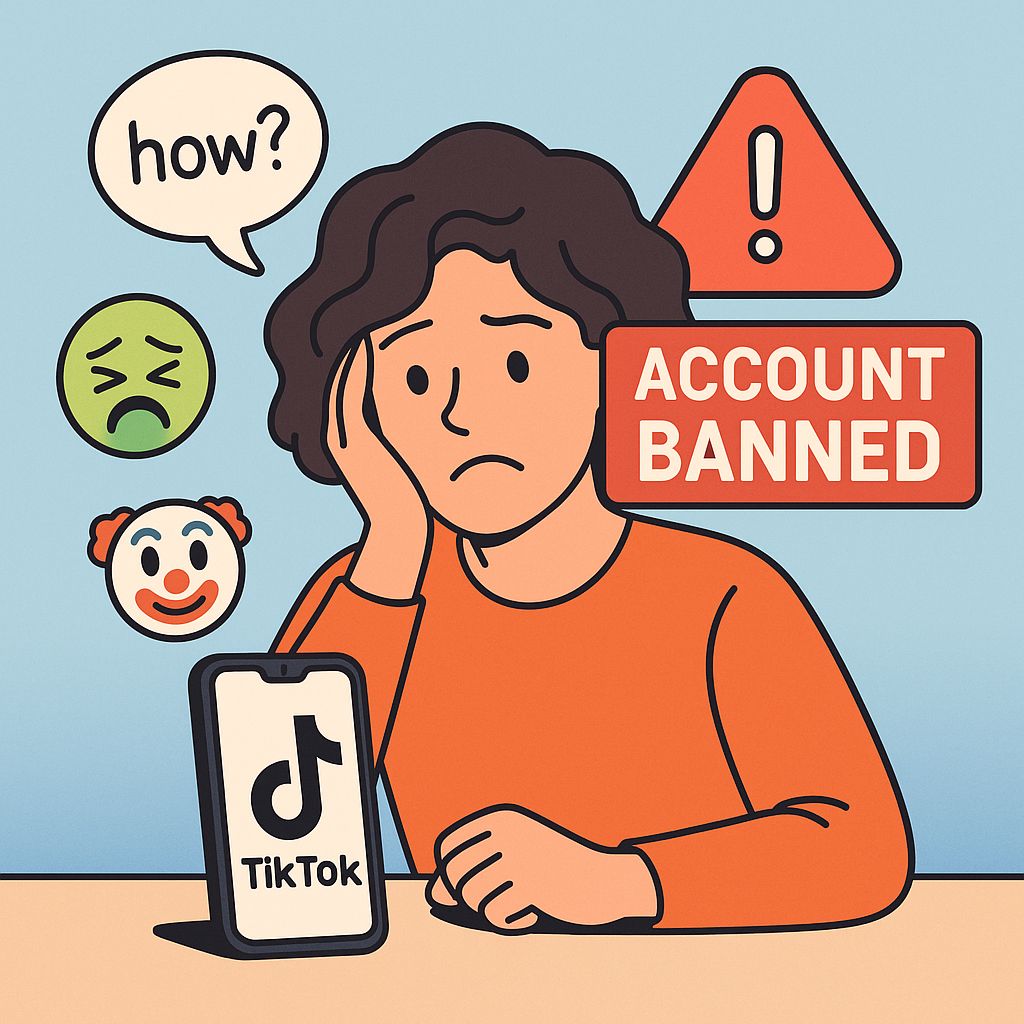
Yes. TikTok’s Community Guidelines say that if someone “keeps breaking the rules, we may limit or remove their ability to comment; in more severe cases, we may ban their account.” Removed comments can add strikes, and TikTok counts Comments as its own feature with its own strike threshold, so an account can be banned over comments alone even when its videos are clean.
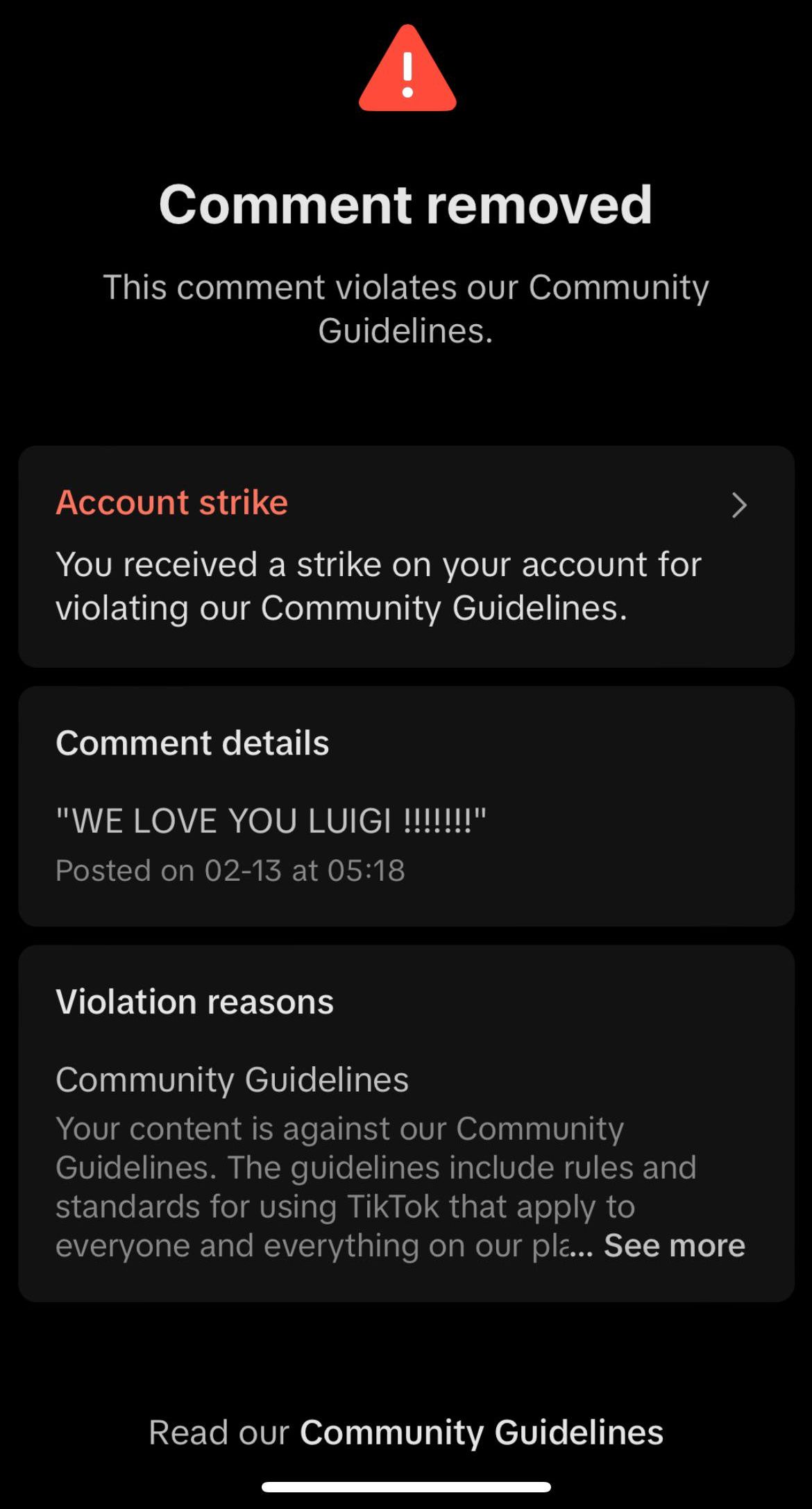
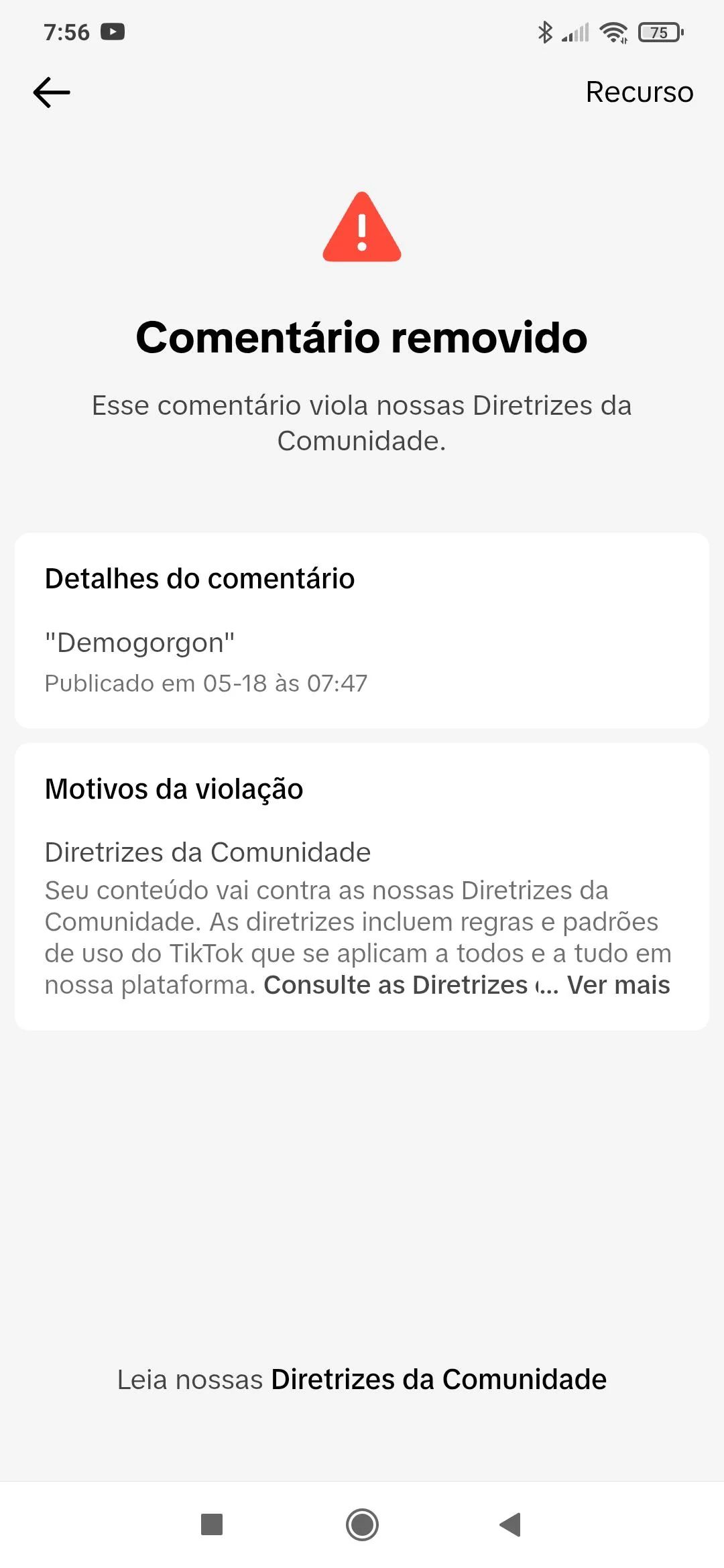
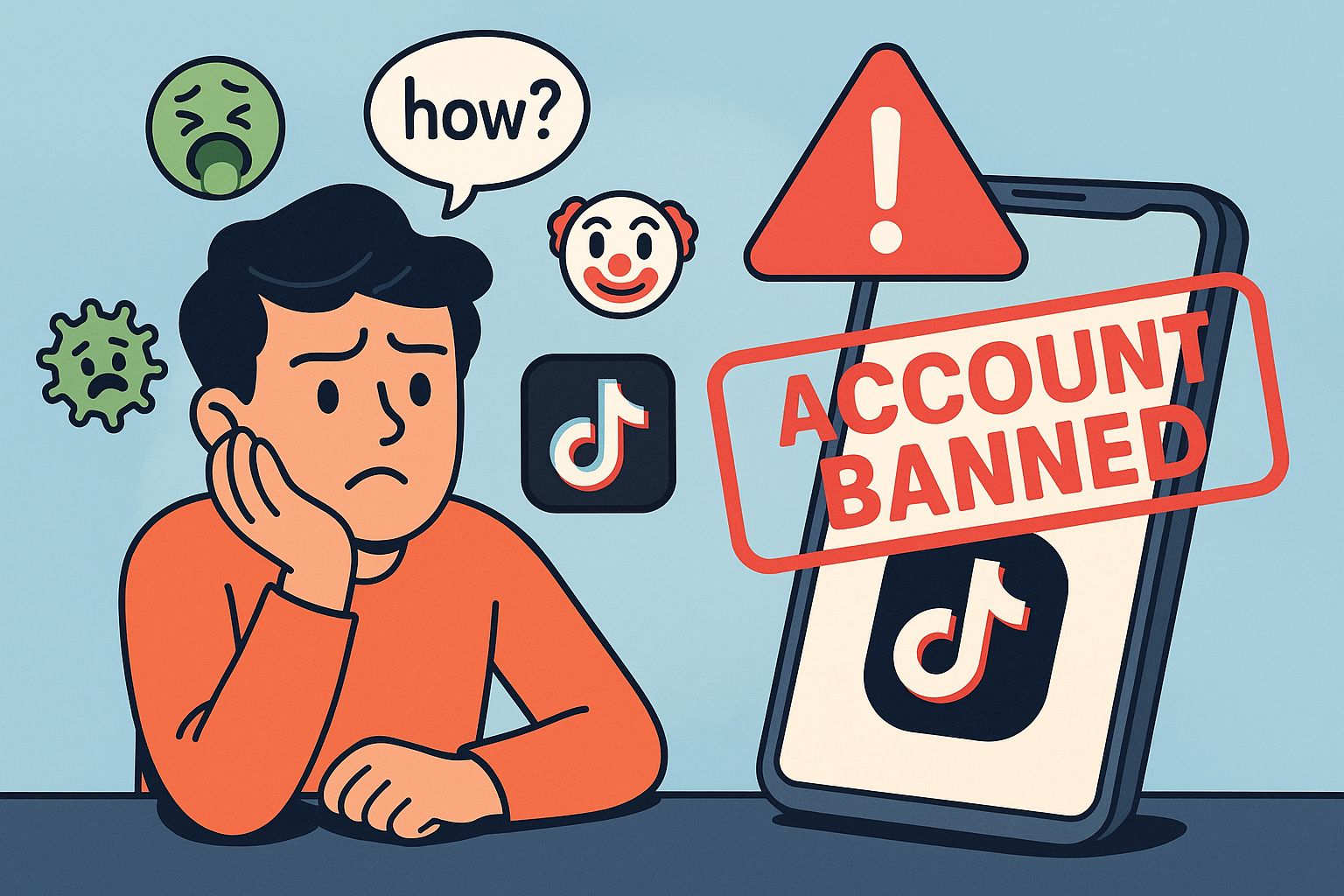
The trouble is what counts as breaking the rules. Users have reported removals, strikes and even permanent bans over comments as mild as these:
-
“Demogorgon”
-
A vomiting emoji
-
And even “how”
None of them carries a slur or a threat. Most are just ordinary words or harmless reactions.
Meanwhile, users keep reporting actual racism, misogyny and dangerous content that passes moderation untouched. If you rely on TikTok for your content, your community or your income, this should worry you.
How Comment Strikes Turn Into a TikTok Ban
TikTok’s Creator Academy guide says that when content breaks the rules, “we remove the content and your account accrues a strike.” If an account “meets the strike threshold within a product feature (like Comments or LIVE) or a policy (like Harassment and Bullying), it will be permanently banned.” Its guidelines add that the response can be “a warning, temporary feature or account restriction, or a full account ban,” depending on what happened.
The thresholds themselves are not published, and TikTok says they vary with the harm involved. It weighs “violations of our hateful ideologies policy more heavily than violations of our spam policy,” and in zero-tolerance areas such as threatening violence, “we issue a permanent ban on the first strike.” TikTok adds that “Accounts that accrue a high number of strikes across policies and features may also be banned.”
Strikes do fall away. TikTok says “strikes expire from your account record after 90 days,” so a removal from four months ago no longer counts toward the threshold.
When TikTok announced the system on 2 February 2023, it said that among repeat violators “almost 90% violate using the same feature consistently,” and the feature-level threshold was its answer to that pattern.
TikTok’s enforcement report data counts 237,517,128 comments removed in January to March 2026, about 0.2% of the comments posted. Harassment and bullying accounted for 95,467,003 of them, roughly 40%.
Plenty of users say they had no idea strikes were piling up until the ban arrived. When they appeal, a reply many of them quote is a single line:
“Your content violates our Community Guidelines and cannot be restored.”
How Long Does a TikTok Comment Restriction Last?
TikTok’s help pages give no time limit for a comment ban or restriction. One creator reports the “commenting too fast” block lasting 16 to 24 hours each time it appears, while some other comment restrictions have lasted a month or more.
The short block is a spam limit. TikTok’s help article on “too fast” notices says the commenting one appears “if you comment on a lot of posts too quickly, or if you send the same comment too often.” It adds that “we may temporarily disable a person’s account in these circumstances.”
A creator getting 1,000+ comments on some videos wrote in r/TikTok in June 2026 that the message kept locking them out of replying to followers, though they typed normally and were not spamming. “I can’t respond for 16-24hrs when it shows up,” they wrote.
TikTok’s enforcement data counts 197,939,722 comments removed from fake accounts in January to March 2026, and its moderation page says it analyzes “how accounts are operated” to catch bot accounts and spam. A real person replying in a burst can look the same to those checks.
Longer restrictions are harder to shift. In a May 2026 r/TikTok thread, a user said a comment restriction arrived after they replied to many comments at once. Others in the thread reported a month, more than 40 days and three months, some after a denied appeal.
One commenter in that thread said a support ticket that reached a person had their profile back to normal in two days. If the notice says you’re commenting too fast, stop commenting and let the block run out; for a restriction that does not lift, appeal from the notification and open a support ticket.
Why Harmless Comments Get Removed
Every comment starts with an automated check. TikTok’s guidelines say content “first goes through an automated review process” and, if it looks like a violation, “it will be automatically removed, or flagged for additional review by our moderators.” That is why a comment can vanish within seconds of posting.
Human TikTok moderators come in when the automated layer passes a comment up, when content gains popularity or when someone reports it. For comments, TikTok’s content moderation page describes keyword lists built “to identify variations of potentially violative text,” backed by AI models that look at “how words are used.” Those models also flag “terms that may be permitted in isolation but become hateful in context.”
A system tuned to catch variations and context-dependent words will also catch comments that only resemble a violation. One user pointed this out directly:
“They deleted a comment where I’m defending someone and I said: ‘Calling her ugly is a lot.’”
Removed for “inappropriate content.” Others trade lists of words that seem to trip the filter, including “ugly” even in someone’s defense, “dumb”, “eww”, “knob” in British slang, “how”, “Demogorgon” and the clown emoji.
TikTok does not publish a list of words that trigger removal. People now test comments on throwaway accounts just to see what gets flagged, and using a second account to get around a restriction is itself a ban reason.
Why Offensive Comments Stay Up While Yours Come Down
Automated removal acts on what TikTok’s systems detect, and a comment they miss gets a second look when it is reported or gains popularity. Users who report slurs say that review often comes back “No violation found,” while their own mild comments disappear within seconds.
While harmless comments keep getting flagged and removed for words like “dumb” or “how,” users keep finding worse comments left untouched. Multiple users reported seeing:
-
Racial slurs, including the N-word, with no action taken
-
Open praise for mass shooters
-
Nazi symbols and swastikas
-
Extreme misogyny and hate speech in livestream chats
Part of the gap is design. TikTok’s guidelines say comments are sorted by factors “including your past replies, likes, and reports.” Some are “sorted lower” instead of being removed, including “Profanity that’s non-neutral or targets others” and “Offensive Statements: Aggressive or provocative remarks about someone.”
The sorting passage and the comment rule quoted at the top of this article are both unchanged in the Community Guidelines in force since 24 September 2026. So an offensive comment can sit low in the thread without breaking a removal rule, while a harmless one that matches a detection pattern is removed outright and can add a strike.
Does TikTok Warn You Before a Ban?
Except for severe violations, TikTok says it does. Its Creator Academy guide says “We’ll notify you if you’re on the verge of a permanent ban,” and its guidelines list “a warning” among the possible responses to a violation. The exception is a zero-tolerance violation such as threatening violence, which TikTok bans on the first strike.
Some first violations now come with a way back. Since 24 September 2026, TikTok’s guidelines say some users “may be given the opportunity to complete optional policy training to restore full access to the platform.”
The help center adds that the training is offered “For certain initial violations” and that completing it may lift “eligible restrictions.” It does not apply when the first violations are severe.
The creator whose post prompted this article describes something very different. They had been on TikTok since 2019, with over 16,000 followers, millions of likes and years of videos, including personal content they can never replace:
-
Drafts never published
-
Videos with old coworkers
-
A clip of their dog that passed away
All gone. They say no warning came, only a message that the account was permanently banned and nothing could be restored.
Creators in the replies reported similar stories:
-
Someone with hundreds of thousands of followers banned in an instant
-
Another user banned simply for saying “ofc I’m cruel to racists”
-
Many creators now running burner accounts to post or comment without risking their main profiles
Whether the on-the-verge notice reaches everyone is impossible to check from outside. TikTok gives you two ways to check where you stand.
Account status, the help center says, reflects your violation history over the last 90 days and reads Healthy, Fair, Severe or Banned. Account check is the second: found in TikTok Studio under More tools, it scans your account and your last 30 posts and shows whether commenting is restricted.
How to Comment Without Risking Your Account
Appeal every comment removal you disagree with, and do it straight away. TikTok’s Creator Academy says that when an appeal succeeds, “we’ll restore your content and remove the penalty from your account,” so a won appeal also clears any strike that came with the removal.
The platform’s own users are now warning each other:
“If you value your account, stop commenting.”
That goes further than you need. These habits keep the risk down without giving up comments entirely:
-
Appeal from the notification
TikTok’s instructions are to tap Appeal in the upper right corner of the moderation notification and submit the request. -
Run Account check after any removal
Find it in TikTok Studio under More tools. It scans your account and your last 30 posts for problems, including restrictions on commenting and posts that received a violation. -
Let old strikes age out
Strikes expire after 90 days, so a quiet stretch lets older strikes drop off your count. -
Slow down
Bursts of rapid, repetitive comments look like the bot activity TikTok’s filters are built to catch, so spread your replies out. -
Skip the second account
TikTok lists “Trying to avoid enforcement” as a reason to ban, and says that if someone “tries to dodge enforcement, we may ban all of their accounts, including associated accounts.” A burner used to comment around a restriction can take your main account down with it. -
Don’t count on deleting the comment
TikTok’s help center says “Deleting your violative content does not remove the violation.” Only a won appeal or the 90-day expiry clears it.
What TikTok Tells You When a Comment Is Removed
Under TikTok’s help center rules, a removal for a guidelines violation brings “a notification explaining why your content was removed, and how to submit an appeal if you believe we’ve made a mistake.” The notices sit under Inbox, System notifications, Account updates. Once an appeal is filed, its status shows in the in-app Safety Center.
Users describe that notice as generic. People file appeal after appeal and get vague rejections, and when they contact support they are met with bot responses. They try feedback forms and either:
-
Can’t find them
-
Can’t access them
-
Or get responses that make no sense
One user said they were locked out of feedback forms completely, even in incognito mode and from new devices. Another said they contacted TikTok support 200 times trying to reach a human.
Because TikTok publishes no strike count for a ban, the on-the-verge notice, Account status and Account check are the main gauges you get.
Can You Get Your TikTok Account Back After a Ban?
Sometimes. A banned account can still log in to submit an appeal and download its personal data, TikTok’s help center says, and an approved appeal reinstates the account status. If the ban stands, TikTok deletes the data after a period set by its retention policy.
If you post content on TikTok, or even just comment on others, a run of removals can end your account. Some people are walking away entirely. Others are moving to:
-
YouTube Shorts, where creators feel they have more monetization options and fewer random takedowns
-
Instagram Reels, which many find more predictable despite Meta’s own moderation issues
-
Burner accounts, which TikTok’s own rules treat as a ban risk when they are used to get around a restriction
And some creators use tools like Flick to pre-schedule content across platforms so their posting plan does not live only inside TikTok.
If you rely on TikTok, you need a backup plan.
Want to stay ahead of unpredictable platform changes?
Start using Flick to schedule your content across TikTok, Instagram, and more.
Also consider setting up your subscriber base with Systeme IO so you’re not at the mercy of one app’s moderation.

