
How TikTok Moderation Works, From a Former Moderator
How TikTok Moderation Works, From a Former Moderator
A deleted AMA from a TikTok moderator, checked against TikTok's own rules and enforcement data: what gets flagged, what a won appeal restores, and why some accounts are
- 1Who Actually Reviews Your TikTok Video
- TikTok Is Replacing the Human Layer the AMA Described
- 2What Actually Gets Flagged and Why Context Is Everything
- 3Some Words Can Trigger a Flag Instantly
- 4Can Winning an Appeal Still Hurt Your Account?
- 5Comment Moderation Is a Whole Other Beast
- 6Shadowbans, Throttling, and the Invisible Wall
- 7Why Some Creators Are Treated Differently
- 8How to Protect Your Content Without Losing Your Mind
- 9TikTok’s Moderation System Is a Mess, and Creators Are Paying the Price
You post a video. It gets flagged, removed, or shoved into the void with 8 views and no explanation.
Was it the caption, the dancing, or that one random word? You appeal, lose, and just like that you’re shadowbanned.
According to a now-deleted AMA from a TikTok moderator, you’re not imagining it. The platform’s moderation system is a confusing mix of overzealous AI, stressed human moderators, policy whiplash, and unclear enforcement.
The source for most of what follows is a single Reddit thread. The claims below come from one former moderator’s telling in a Reddit AMA that has since been deleted. TikTok has since published its own account of moderation, strikes and appeals, so the claims are checked against it wherever it addresses them, and against moderators who posted on r/AMA in 2025.
TikTok says almost all of this work is now automated. In its enforcement report for January to March 2026, about 97 percent of the 184 million videos it removed came down through automation or AI moderation. Most decisions about your video are made without a person involved.
We broke down a related case in why TikTok flags original content as unoriginal.
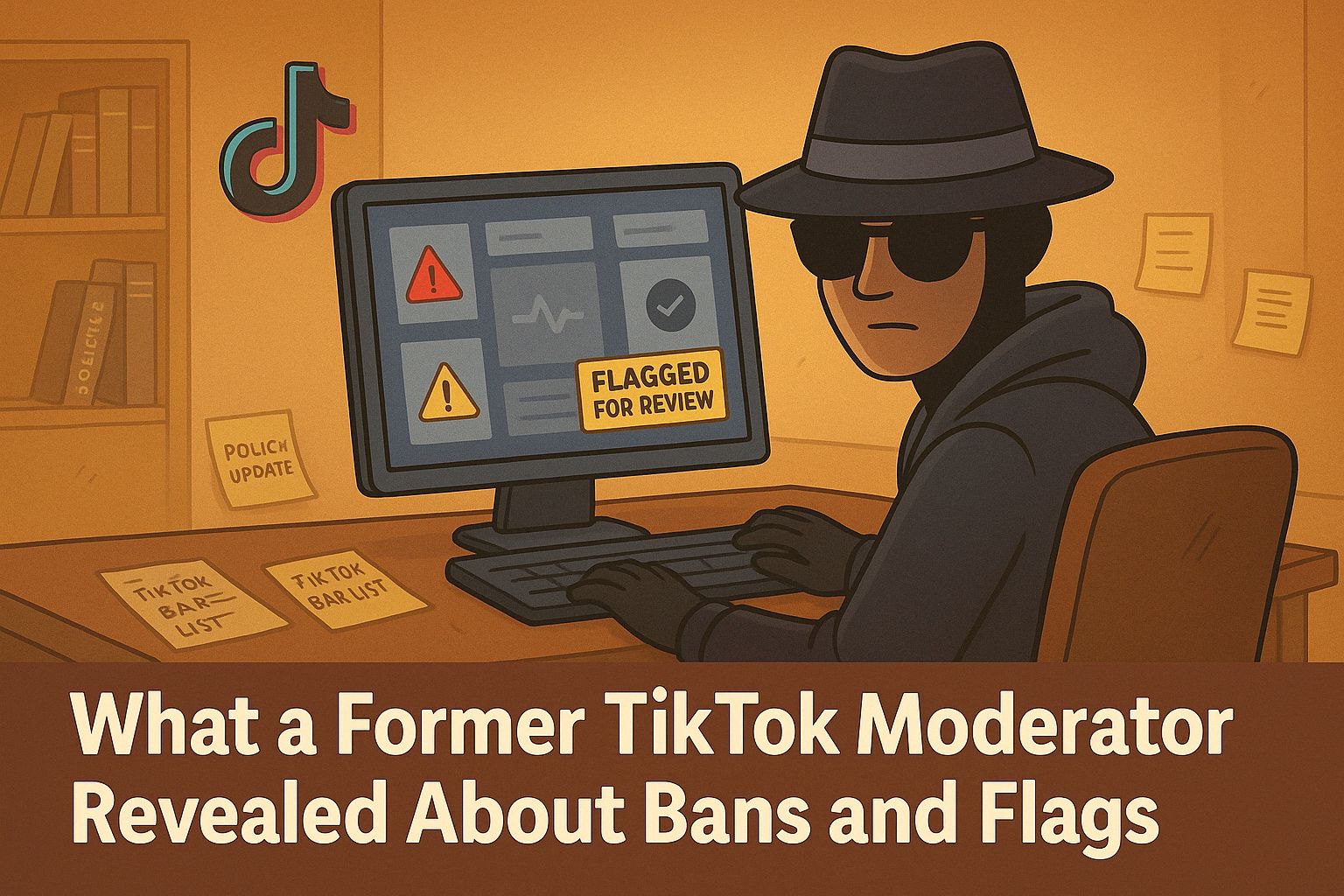
Who Actually Reviews Your TikTok Video
Machines make most of the calls, and the human layer is shrinking. By TikTok’s own account, everything uploaded goes through an automated review and only unclear cases go to a moderator at that stage. A video gets a second look when it gains popularity or when someone reports it.
If you thought TikTok moderation was just a bunch of bots pulling levers, you’re half right. There are human moderators, and the AMA described them as overwhelmed, under-trained, and reviewing up to 2,000 videos per day.
Moderators who posted on r/AMA in 2025 describe a different job. In a June 2025 thread, a former TikTok content moderator put their own load at “disturbing 100-200ish videos in 8 hours”. The moderator who started that thread said the AI deals with cases and that their team members “use the cases to train the AI to do better.”
The 2,000 figure comes from the AMA alone and TikTok has never published a per-moderator quota, so treat it as one worker’s experience. The direction it points is corroborated by what the company has done since.
TikTok Is Replacing the Human Layer the AMA Described
In August 2025 TikTok said it would restructure its UK trust and safety operations, putting several hundred jobs at risk as it moved to AI-assisted moderation. The same global reorganization hit moderator roles in South and Southeast Asia, notably Malaysia.
A TikTok spokesperson told AFP the company was “continuing a reorganisation that we started last year… concentrating our operations in fewer locations globally”. TikTok added that it planned to reshape moderation “with the benefit of technological advancements”.
The union representing affected staff read it differently. John Chadfield, a national officer at the Communication Workers Union, said workers “have long been sounding the alarm over the real-world costs of cutting human moderation teams in favour of hastily developed, immature AI alternatives”.
In the United States, TikTok USDS Joint Venture LLC, which oversees TikTok’s US operations, said in August 2026 that it would close its Nashville office in October and lay off 250 workers. A spokesperson said the decision was specific to that office.
The notice filed with Tennessee did not list roles, but some jobs were related to content moderation, according to Nashville Metro Councilmember Terry Vo, as reported by the Los Angeles Times. TikTok did not answer whether AI was a factor.
Speed is the trade TikTok is buying. On its own content moderation page the company now states that in 2025, 94 percent of total removals took place within 24 hours.
The automated share has climbed, though not on a like-for-like basis. The same page puts automated detection at over 91 percent of the violating videos TikTok removed in 2025. Its Community Guidelines Enforcement Report for January to March 2026 lists 147,864,952 removals by automation and 30,149,202 by AI moderation, out of 184,012,576.
TikTok’s note in that report says it began adding AI moderation takedowns to the automated count “from this report onwards”, so at least part of the jump reflects a change in what gets counted.
As for the “under review” label, TikTok’s help article on violations and bans says content under review is checked by its Trust and Safety team for removal or For You feed eligibility.
That check can come at upload, when a post gains popularity, or after a report. The label can appear on private posts too, which our guide to private videos under review covers.
And then there’s the AI.
According to the moderator, most videos are flagged by automated systems long before a person ever sees them. Sometimes those videos never make it to a human because the system thinks they’re fine, or problematic enough to remove outright.
Even when a person does step in, they don’t always have context. They can’t view your account as a whole, and they judge that one video in a vacuum, using constantly shifting guidelines.
So yes, your video might get flagged for “nudity” just because someone jumped too enthusiastically in a crop top.
What Actually Gets Flagged and Why Context Is Everything
Framing and proportion decide most borderline calls. The same dance, cigarette or child on screen can pass or fail depending on how much of the frame and the runtime it occupies.
The examples below come from the AMA itself.
Twerking? It depends: a short clip in a club is fine. A full video of suggestive dancing with close-up framing will get flagged, especially if more than 50% of the screen is “butt” or the twerking exceeds 50% of the video’s length.
Filming while driving? Flagged unless you clearly have both hands free and never look at the camera.
Smoking, vaping, or drug references? Even coded language (like “garden party”) can slow down your views or get you pulled from the For You Page.
Women with large chests? They get flagged more, the AMA says, through bias rather than official policy: suggestive movement, jumping and tight clothing are flagged more often on larger bodies. TikTok trains against this bias, but it still happens.
Kids on screen without adults? That’s risky. If the system can’t tell the child is supervised or over 13, the video may be flagged, or worse, the account may be labeled unsafe.
Two moderators who answered questions on r/AMA in 2025 describe the same problem from the inside. One said videos often get banned “not for their main focus, but for something background/unintended.” Another listed alcohol, tobacco, cannabis, firearms and sexualized behavior as enough for a video to be “not recommended”.
And that “educational or entertainment purposes” disclaimer? Meaningless. If you post something controversial, satire or not, it’s the actual content that gets judged, not your intent.
Guidance TikTok published in September 2026 gives intent more weight than that. It says documentary, educational, satirical and artistic content may stay up even when it would otherwise break a rule, though it can still lose For You feed eligibility or get a warning screen.
TikTok asks creators to make that intent clear “using captions, stickers, or a voiceover”, and it makes no exceptions “for content that could cause extreme harm.” That makes the AMA’s “meaningless” too strong for educational and satirical posts, although it still holds for anything TikTok treats as extreme harm.
Some Words Can Trigger a Flag Instantly
TikTok has never published a banned-word list, and the AMA’s examples suggest why. The triggers described are contextual and change often, so any list circulating online is a guess at a moving target.
By the AMA’s account, TikTok keeps an evolving, internal list of words and phrases that can get your video flagged, throttled, or outright removed, even if they’re not being used maliciously.
According to the moderator:
-
Saying anything like “rigged” or “stolen” in reference to an election? Auto-flag. No exceptions.
-
Using euphemisms for drugs, even clever ones? TikTok’s AI is trained to search for and identify them. “Garden party” and similar phrases are not safe.
-
Swear words? Usually fine in music or non-targeted language, but use the same word at someone and it’s bullying.
-
Even words like “dolt,” “dense,” or “foolish” have gotten creators flagged, especially when aimed at others in the comments.
-
Sarcasm, tone tags like “/j” (joking), or even creative expressions like “Free Luigi” have been flagged simply because the algorithm doesn’t get context.
Worst of all, creators are being punished inconsistently. One person says “Free Palestine” and gets flagged. Another uses a slur and stays up for hours or days unless mass-reported.
What decides it is how the system interprets the word in that moment.
Swapping in a coded spelling does not get around this, by one moderator’s account. A moderator working the European market was asked in a November 2025 r/AMA thread whether substitutes such as “grape”, “unalived” or “sewerslide” change the outcome. “They make no difference,” they answered, adding that the video is taken down or at least restricted.
Can Winning an Appeal Still Hurt Your Account?
By TikTok’s rules, no. TikTok’s Creator Academy says a successful appeal restores the content and removes the penalty, adding: “It won’t affect your account going forward.” The AMA describes accounts that kept losing reach anyway, and nothing public settles which version is right.
Several creators in the AMA thread reported that even after they won an appeal and got their content restored, they faced invisible penalties. Their videos stopped reaching people, their Promote features got locked, and their lives pulled 2 viewers instead of 2,000.
The moderator said that repeated appeals, even successful ones, can make the system treat your account as “problematic.” One user even received a message warning that more appeals could result in a permanent ban.
TikTok documents one kind of ban warning, and it is tied to strikes. Every removal for a Community Guidelines violation adds a strike, and TikTok says it will notify you “if you’re on the verge of a permanent ban”.
Strikes “expire from your account record after 90 days”, and an approved appeal reinstates both the content and the account status.
Reversals are common enough to matter. TikTok restored 8,838,710 videos in January to March 2026, a quarter in which it removed 184,012,576, so the restored count equals about 5 percent of that quarter’s removals.
One moderator has little more faith in the process than creators do. Asked to rate TikTok’s handling of appeals from 1 to 10, the moderator behind the June 2025 r/AMA thread answered “-9” and called it “Completely at bytedance’s whim.”
So should you appeal? TikTok’s own answer is yes: it encourages you “to appeal any decision you believe was made in error.”
This gray area is why many creators start to self-censor, having decided that navigating the rules is too risky.
Comment Moderation Is a Whole Other Beast
Comments run on a separate pipeline with separate triggers. The category you pick when reporting can change the odds of the comment coming down.
Comment moderation does not run on the video rules, according to the AMA. It describes a different team, different triggers and often less context.
Comments also count as a separate feature under TikTok’s strike rules. An account that meets the strike threshold within one feature, such as Comments, is permanently banned.
Comments flagged for bullying or harassment don’t get weighed the same way as video content. A throwaway line like “well that was dumb” could trigger a strike, while someone else saying something clearly hateful gets a pass.
The moderator also said that report category matters. If you report a hateful comment under “hate speech” and it gets ignored, try reporting it under “harassment” or “bullying.” That simple switch can raise the odds of it getting removed.
Creators can also be held accountable for their comment sections, by the AMA’s account. If a hateful or suggestive thread builds up under your video and goes unchecked, your post, or entire account, can take the hit.
The moderator working the European market backs the context problem, saying moderators sometimes do not see the full comment thread or how a comment relates to the video. Removals of harmless comments, they said in another reply, may be AI moderation that human moderators do not influence.
A report sends the content for another review, and you can track the status of reports you have filed in the in-app Safety Center.
For reported videos, the response is fast. Of the videos TikTok removed after a user report in January to March 2026, 96.2 percent came down in under two hours, by its own count. The same quarter saw 237,517,128 comments removed.
Shadowbans, Throttling, and the Invisible Wall
TikTok does not use the word shadowban, and the AMA says the internal term is throttling. The effect creators describe is a video that stays up while its distribution is capped.
TikTok documents the post-level version under another name: ineligible for the For You feed. Such a post “won’t be displayed in the For You feed”, and its Analytics shows a warning bar at the top of the Performance tab.
Analytics has to be switched on to see it (Profile, the menu, TikTok Studio, Analytics, Turn on). From the notification you can read the reason and appeal, and a successful appeal makes the post eligible again.
The word “shadowban” gets tossed around a lot, but according to this moderator, it’s real. Only it is called throttling internally.
When you’re throttled, your videos:
-
Don’t appear on the For You Page
-
Stall at low views (often 0 to 20)
-
Can’t be promoted or monetized
-
Get skipped over even by your own followers
The AMA says it doesn’t take much: a single flagged post can slow down an entire account, and repeat flags, even reversed on appeal, can put a profile in “probation” for weeks or months. In extreme cases, it says, the account never recovers.
TikTok’s published rules set a clock on this. Account status (Healthy, Fair, Severe or Banned) reflects your violation history over the last 90 days, and expired violations “will no longer be taken into consideration.”
Plenty of creators who post bangers back to back and still see zero momentum suspect exactly this. Before blaming a hidden penalty, check each post’s Analytics and your account status, since TikTok says it tells you whenever it removes a post, limits it or restricts it another way.
Why Some Creators Are Treated Differently
Identical videos get different outcomes because the inputs around them differ. Who reported it, which category they chose, how fast it was spreading and the account’s prior record all feed the decision.
If you’ve ever watched someone blow up for doing the exact same thing you got flagged for, you’re not imagining it. The moderator explained that moderation outcomes depend on several inconsistent factors:
-
Who reports the content and what category they choose
-
Which moderator sees the content (human bias exists, even with training)
-
How fast the video is spreading when it’s flagged
-
Whether your account already has prior strikes or “trust issues”
-
How recognizable you are (yes, bigger creators sometimes get more leniency)
This explains why accounts impersonating creators can stay up for weeks, while smaller accounts are flagged instantly for a meme or out-of-context soundbite. The same video can draw different outcomes depending on who flagged it and who reviewed it.
And unfortunately, moderators can’t check your account history. Each decision is made based on a single piece of content, in a sea of thousands, with barely any time to assess it.
Language adds another variable. The moderator working the European market said moderators are limited to language markets and that content sometimes goes to non-native speakers, which can get cases misjudged. English took the largest share of TikTok’s moderators in January to March 2026, 29.4 percent by the company’s own count.
One group gets different treatment by design. TikTok’s help center says that when government, politician and news accounts reach the violation limit set for all accounts, “they’ll be temporarily ineligible to appear in the For You and Following feeds for 90 days.”
How to Protect Your Content Without Losing Your Mind
Assume the first decision is automated and plan for it. Keep originals, check each post’s Analytics and your account status, and appeal the decisions you believe are wrong, since a won appeal removes the strike.
So, what can you do?
Most of this list is the AMA moderator’s advice, corrected where TikTok’s own rules differ:
-
Keep copies of everything. If a video gets flagged, you’ll want the original.
-
Don’t move to another account to get around a restriction. TikTok allows several accounts, but posting violative content on one while another is restricted, or spreading violations across accounts, can get them restricted or banned too.
-
Avoid risky phrasing, even if it’s sarcastic or joking. The bots don’t get nuance.
-
Use third-party tools like Flick or Systeme IO to organize drafts, back up posts, and plan content in a safer space.
-
Turn on Analytics and check your account status. A For You feed restriction shows as a warning bar in a post’s Analytics, and violations appear in Inbox under System notifications, then Account updates.
-
Appeal the decisions you think are wrong. TikTok says a successful appeal restores the content and removes the penalty, and strikes expire after 90 days either way.
Ultimately, the goal is to stay visible while still being yourself, and sometimes, that means playing defense even when you’ve done nothing wrong.
TikTok’s Moderation System Is a Mess, and Creators Are Paying the Price
What the AMA described was a system full of gaps, contradictions and inconsistent enforcement. Whether that is simple incompetence or something worse is a separate question.
Good creators are getting flagged while abusers slip through, and whether a won appeal leaves a mark is still one moderator’s word against TikTok’s. And nobody really knows what will trigger a takedown until it’s too late.
If TikTok wants to keep creators, and avoid turning into another burnout app, it needs to apply its published rules the same way every time and say more about what content is actually allowed.
Until then, keep backups and check a post’s Analytics before you assume the worst.

